15.8. - 18.8.2021 Monte Verità, Ticino
Organizers: Marcelo Sánchez-Villagra, Chiara Barbieri, Tomás Bartoletti
A workshop sponsored by the platform Congressi Stefano Franscini (ETH) and the Latin American Center Zurich, and The Swiss National Centre of Competence in Research (NCCR) Evolving Language to promote exchanges and conversations on the state of the art research on human diversity and landscape impacts in South America. Participants include experts from different fields such as archaeology, history, anthropology, linguistics, genetics, ethnobotany.
Open webinars from keynote speakers:
Prof. Eduardo Góes Neves – Monday, 16th of August, 18:00 – 18:45:
"An overview of human occupation of the Amazon - the emergence of language diversity and hypotheses on its chronology"
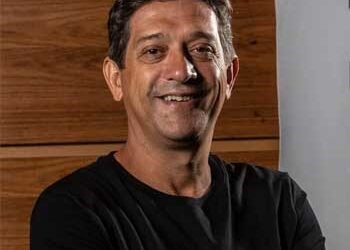
Eduardo Góes Neves is Professor of Brazilian Archaeology at the Museum of Archaeology and Ethnology for the University of Sao Paulo (MAE-USP), Brazil. He has more than 30 years of research experience in the Brazilian Amazon, where he has coordinated different multi-year survey and excavation projects. His current research is a joint Bolivia–Brazil–UK project on the long-term landscape and indigenous history of the Southwestern Amazon.
Prof. Susanna Hecht – Tuesday, 17th of August, 18:00 – 18:45:
"What prehistory and the rubber boom can tell us about forms of tropical mobilities, and how might inform us about different infrastructure spatialities and futures strategies"

Susanna Hecht is professor at UCLA and a specialist on tropical development in Latin America, especially the Amazon Basin and Central America. Her research focuses on the political economies of development ranging from corporate frontiers of cattle and export commodity agriculture (like soy, oil palm) to populist land occupation. Her books have won numerous prizes, most recently, Scramble for the Amazon and the “Lost Paradise” of Euclides da Cunha won the “Best Book in Environmental History” from the American Historical Association.
Link to the webinars: uzh.zoom.us
Contact Info: Chiara Barbieri
South America was the last habitable continent that became populated by Homo sapiens. In this continent of great biosphere diversity, human diversity developed with a myriad of languages and cultural forms originated and transformed over time. These cultural expressions reflect multiple ways of conceiving and interacting with the environment around us. This great accumulation of culture and knowledge is expressed in the material legacy, with a wide range of artefacts and inscriptions, as well as in linguistic diversity, and musical expression. These subjects have been described from different perspectives by the disciplines involved, such as history, biology, and cultural evolution. Each discipline has made major conceptual and methodological progress, overcoming boundaries and exposing the need of a cross-disciplinary integration. The perception of the past coming from each field is now permeable to broad influences, while new discoveries and theoretical shifts are questioning historical assumptions from traditional scholarship.
By bringing together researchers from different fields looking at the same geographic region, we aim at engaging on discussions that touch on problems of common concern, looking at specific patterns and processes of change in space and time in South America. A synergistic mix of attendees will present the latest results of their empirical research, engaging in methodological discussions and focusing on cross-disciplinary integrations and applications. The two open webinars from influential speakers will touch critical perspectives on the historical, environmental and archaeological impacts on the continent, and will be followed by a Q&A session to open a dialogue with the online audience and the participants in Monte Veritá.